Friday, October 31, 2008

Readers' Reactions to Finding Creatures & Other Stories


I keep getting these wonderful comments from readers. (Yes, yes, most of whom are my friends, but who else would be the first readers of a new book?) I've been saving them in a file that I supposedly will go back and thumb through in my old age or something. But why not share a few with you now?

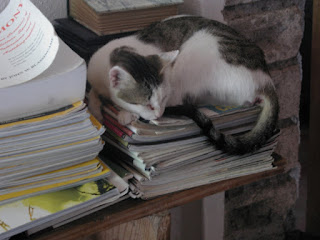
The photo above is pretty eloquent all by itself. That's Tracy Lowe of Victoria, B.C., falling into the psychic entrapment of my prose. (Well...okay not really.)

Comments

Wow!!! I absolutely love the cover. And all those recommendations.

-- Eileen Kernaghan.

I have nearly finished your book. I have been truly amazed at the layers in every story I've read so far. Of course, many I heard you read at our group. Each time I read them, I discover more innuendos, more knowledge, and more delights. Your intellect is so vast and keen. I am thrilled by the changing voices and philosophies, too.

Well done! I hope it sells vast numbers of copies--it really deserves to, you know.

When it's listed on Amazon, I shall write a glowing review.

-- Julie Ferguson.

V-con and you and the whole damn thing were great! And so far your book is blowing me away. Wow. I mean it. Wow.

-- Jo McBride Wilson

Just wanted to let you know how much I enjoyed last night. You read beautifully, and the story was so interesting, mysterious and engaging. And I loved how you handled the presence of the 2 kids. And the music was a wonderful surprise, too.

Thanks for letting me know about it. I'm really looking forward to reading the rest of the stories.

-- Anne Hepper

Listen, Casey J, you may get very very tired of hearing this, but Claude and the Henry Moores is just a pure sweetheart of a story; if I never read any further it's been worth it. Can't wait to see what comes next.

Another reason I liked it was I used to live on Beverly Street (in Judith Merril's house), and I knew some of the sculptures in the story. Well, not as well as Claude, but well enough to be on a nodding acquaintance basis. My all-time fave Moore is The Archer outside Toronto's City Hall. I remember him as being a bit curmudgeonly (that's what being around so many politicians will do to you) but quite a student of civic politics. If I run into Claude sometime, I'll introduce them to each other, and he can work his magic.

See, there's the magic in your story. It's completely easy-breezy to assume Claude's a real person and slip into his world, one where among other things aliens live trapped in sculptures. Do you think you'd ever revisit Claude and his project?

Nicely done.

-- Michael Price

Casey I love your book. Powerful messages oozing from the belly of that book, it's like the earth protesting and trembling from below. They aren't just stories for a story's sake, there are messages, there is a purpose - I like that.

-- Maggie V. Jones

I'm excited about sharing your stories with the people in my life - thank you for writing them. They are beautiful, and they change how I am in the world. It's a little easier to look out at the people on the skytrain and the bus and feel at home, and notice possibilities of connection and wonder and just plain good stuff.

-- Patti Powell

Just read Thunderbirds - totally loved it. I think the thing I love most about your writing is your tone - warm, affectionate, funny, compassionate and curious. I also love how erudite (I probably should look this up to see what it means - I think it means knowledgeable) you are, each story is an education. And on top of that you have such a uniquely creative imagination - understanding a tree from the inside out gave me shivers.

-- Samantha Sanderson

I am LOVING it - absolutely superb. DEVOURING it.

-- Gemma Dubaldo.

Your book is a phenomenal accomplishment!! Would you please send me 2 more copies autographed?

-- Sister Cecilia Tallack.


Isn't that last one fun? She was my teacher in Grade 4. I was a little worried she might not like it...

Casey, your book arrived here yesterday and I've been reading it at every spare minute since! It's great! I'm up to beginning 'Miss Lonelygenes' and I've loved all the stories so far. I certainly won't ever see a Henry Moore sculpture in quite the same way again! Great! I love it! When is the next volume coming out.....?!

-- Julie Bond.

Wonderful, imaginitive and varied, an endlessly interesting collection of short stories, that linger in the mind. Ms. Wolf writes in a fresh modern way, her sense of humour a friendly delight! Thanks Casey! (Review from LibraryThing.)

--Krista Reich

I am treasuring your book and enjoying being with you on this journey.

-- Esther Hisza

Finding Creatures & Other Comforts:

Hi, Casey, I _know_ it's "other stories" but still. I finished reading the collection this afternoon--at least all the stories original to it--and am finding myself feeling uplifted. Not in a David Brin way but rather in a quiet, yes, that's the way it could be manner.

Thank you.

--Peter Halasz

Warmest of hugs to you, with a grateful heart.... I am n the 3rd reading of your book btw.

--Gemma Dubaldo

Sorry for not having emailed you yet to say how much I enjoyed Finding Creatures. Also, it's a beautifully made book--congrats to all concerned. A real review in SFC (Science Fiction Commentary)--when I get around to it.

--Bruce R. Gillespie

Cheers, love, hugs, whatever works.

Casey

Tuesday, October 28, 2008

Some Launch Photos I Didn't Get Around to Putting Up Before


Mine is not to question why. Blogger wants to put the later photos before the earlier ones, who am I to argue?

So, in reverse chronological order:
Me reading at Pulp Fiction, 11 October. (photo Nick Zenthoefer)
Alison of Jonathan Teague & Friends, warming the crowd at Pulp Fiction. (photo C. June Wolf)

Eileen Kernaghan reading from Finding Creatures at White Dwarf. 28 September.
Me again! Signing at White Dwarf. (both photos, Julie Ferguson)

Friday, October 10, 2008

Internet Interview

I was interviewed at VCon by Irma Arkus of Hi-Sci-Fi (Friday is Alright for Nerding): The Ultimate Geek Radio Show. We were in the swanky penthouse boudoir of Con Chair Danielle Stephens at Surrey's Compass Point Inn. The show airs on the internet Fridays 5-6 PM PST at 90.1 FM (CJSF) and my interview will be archived on the website when it is done being edited.

I am as curious as anyone else to know what I said. I'd been told it was for a student radio program, so I thought, great! No one will ever hear it! Consequently I was fairly playful and unguarded in my thoughts...

Oh, oh.

Well, time will tell.

Thursday, September 25, 2008

Writing Group Glories

Gloria Barkley got the ball rolling at the Writing Group at Port Moody Kyle Center today. She brought a draft press release celebrating the fact of five new books published by members in the last handful of months. She and Julie Ferguson got us up and posing with our Hot Off The Press tomes, and before you could type "Bob's Your Uncle" Julie was at home posting one of her photos to her blog, along with a pithy reminder of the value of writing groups.

I have to agree. I am a longtime member of Helix, Vancouver's oldest speculative fiction writing group, and have been with Kyle for three or four years. The members of these two very different groups have contributed enormously to my writing and have filled in the tremendous gaps in my knowledge around critiquing and self-critiquing, publishing, promotion, etcetera. More than that, having a supportive and enthusiastic group of varied individuals to meet with weekly has given me both a regular deadline to meet and a continuous infusion of inspiration and joie de l'écriture.

By the way, Julie is a font of useful information--I have leaned on her expertise rather heavily from time to time. Anyone new to the writing and publishing scene, or anyone wanting to update their knowledge of publishing, have a look at the new edition of her Book Magic: Turning Writers into Published Authors. It's fun, well-written, and packed with helpful tips.

Tuesday, September 16, 2008

Wattle and Daub Books


Finding Creatures & Other Stories is being published by the brand new publisher "Wattle and Daub Books". For more about the book (including very pleasing comments from authors and reviewers) and for preordering information, please go their site at www.wattleanddaubbooks.ca.

Counting down to the launch. (Gulp.)

Cheers!

Wednesday, August 20, 2008

Finding Creatures & Other Stories: Launch, 28 September, Reading, 11 October

Book Launch & Reading

In a few weeks time I will be launching my short story collection Finding Creatures & Other Stories at White Dwarf Books, in conjunction with Eileen Kernaghan and her novel Wild Talent: a novel of the supernatural. If you are in the neighbour- hood you are invited to come down and celebrate with us. Have a drink of wine and some nibblies and a yak. (Not a yak. Just a ‘yak’.) I’m looking forward to it.

For a taste of what the collection holds, you can read “The Coin” and “After Hours at the Black Hole” at their respective posts on this blog, as well as snippets of “Mr. Cowmeadow’s Sky”, “Aggie’s Game”, “These Old Bones”, and “Miss Lonelygenes’ Secret” in the post “Storyteller Times Two”.


Launch

28 September, 2 pm

White Dwarf Books

3715 West Tenth Avenue

Vancouver, B.C.

228-8223

www.deadwrite.com


Reading

11 October, 6:30 pm

Pulp Fiction

2422 Main Street

Vancouver, B.C.

876-4311


http://www.pulpfictionbooksvancouver.com/


i

Finding Creatures & Other Stories

“Wolf uses different genres, different voices, different cultures—in short whatever she needs to make the story work. What ties it all together is her sure-handed prose and a depth she brings to her writing, that indefinable element that rises up from between the lines and gives a good story its resonance…

“…rather than my trying to convince you to buy it, let me ask you instead to pass it around when you’re done. Talk about the stories that moved you, about Wolf’s voice, and her gift of storytelling.

“I want this book to be a success because I want to look forward to reading more new stories by her for many years to come.

“And so should you.”

—from the introduction by Charles De Lint, author of The Onion Girl and Dingo.

i

Literary, science fictional, slipstream, and fantastic—this medley of stories is grounded in the present day, weaving backward to the life of Saint Francis, and forward to a time when Earth is a memory, and new humans are finding their place among the stars.

Wolf’s characters grapple with personal integrity and connection with others, with the imperatives to abandon fear and hate and to question cherished beliefs. A Haitian street kid with a mercurial coin, a skid-row waitress with a passion for palaeontology, and aliens inadvertently trapped in sculptures by Henry Moore—all journey side by side with a northern Native man who searches for somewhere to bury a dead spaceman, and two teenagers who build an old-style science-fiction machine with a very modern purpose.

Wolf’s unexpected approach to story telling interlaces humour, compassion, and a compelling affection for human and nonhuman with a fine-spun unorthodoxy in these understated tales of this world and beyond.

i

Cover image by Maggie V. Jones, Cover Design by Clélie Rich

Wednesday, July 16, 2008

A Mosque Among the Stars--September Release

Ahmed Khan and Muhammad Aurangzeb Ahmed have announced a September release date for their speculative fiction anthology A Mosque Among the Stars.

The lineup is as follows:

Lucius Shepard: A Walk in the Garden

Tom Ligon: For a Little Price

Jetse De Vries: Cultural Clashes in Cadiz

Howard Jones: Servant of Iblis

Andrew Ferguson: Organic Geometry

Ahmed A. Khan: Synchronicity

Camille Alexa: The Weight of Space and Metal

G.W. Thomas: The Emissary

Kevin Miller: A Straight Path Through the Stars

Pamela Taylor: Recompense

C. June Wolf: Miss Lonelygenes' Secret

D.C. McMahon: Squat


Congratulations, Ahmed and Muhammad--and thank you for this much-anticipated offering.

Thursday, July 10, 2008

Going On Air Monday!


If you happen to be in Haiti on Monday, you can check out the one-hour program starring myself, Dé Bryant, Amanda Schramm and Stephanie Snyder, being interviewed about our visit to Haiti. The interviewer, Carla Bluntschlii, started off by asking us how people reacted when told we were coming to Haiti, at a time when food riots and kidnappings and clay pies were in the news (see my Notes from Haiti, below). Then she went on to ask what our actual experiences had been, why we came at all, would we come back...

Here is the note she sent today:


Dearest all,
Your words of sincerity and love of Haiti in spite of the obstacles will run through the veins of the people of Haiti on Monday afternoon. This afternoon I will be going to translate clips that we will use for the show on Monday.
May you be blessed as you go on this earth and know that your courage and lives have given strength to many others!
love to you all,
Carla

Sunday, July 06, 2008

Artist & Author Finds a Kidney


Writer and sculptor Persimmon Blackbridge of Hornby Island, B.C. is looking for a kidney donation. This wonderful human and brilliant, edgy artist has written her request below. Please have a look, and look into her art, as well.

(The day after I posted this Persimmon's
medical team confirmed they have found a
match for her. YAY!!!)


Hello,

I don't know how to write this. I don't like group emails, especially not ones going to everyone from my best friends to people I barely know. I don't like asking for big big giant humongous outrageous favours, and this is just about the biggest.

I'm looking for a kidney. Blood type O.

Two years ago, a false positive on a diabetes test led to the discovery that my kidneys were failing - not from diabetes but from a hyperactive parathyroid gland flooding my system with calcium for the past 10 years or more. It was a lucky accident that it was discovered, but it had already damaged my kidneys to the point of no return, and I will need dialysis or a kidney transplant in the next year or so.

My brother and sister both stepped forward immediately, and it was a huge disappointment to learn that they are both the wrong blood type.

Now a couple of friends are beginning the testing process to see if they might be potential donors. The transplant social worker advised me to find more potential donors if I can, as most people turn out to be incompatible or are eliminated for health reasons. So now I'm asking you and everyone I've ever known if this is something you would be willing to look into.

It's a big decision; it's not right for everyone. I don't expect an answer and I'm never going to ask you again.

All I ask now is that you think about it for a minute. Is this something you might do?

Obviously you would have questions or concerns about how being a donor would affect your health or lifestyle or finances. There are many places you can ask questions and get real, accurate information. There are websites by and for living donors ( http://www.livingdonorsonline.org is one). There is a nurse at St. Paul 's Hospital in Vancouver who works only with prospective donors - her job is to look out for the interests of potential donors, and she keeps strict patient confidentiality (her phone number is at the end of this email).

The bottom line is: screening for donors is very thorough. If you have any health problems, they will find them. If donating poses any health risk, you will be turned down. If you pass the health tests, there are still tissue compatibility tests that could eliminate you as a donor. I know people who have had ten potential donors step up for them, only to have them all eliminated. That's why I have to ask everyone. That's why I'm asking you.

Right now I have only one kidney left, and it's quite damaged, operating at 20-25% of normal function, down from 30-35% last year (whereas one healthy kidney provides 80% of the function of two). When I hit 10-15%, I'll need a transplant or dialysis to stay alive. At that point, if I don't have a compatible live donor, I'll go on dialysis and be put on the waiting list for a deceased donor transplant. In BC, there is an average wait of 5-10 years on the deceased donor list. People like me with type O blood usually wait approx. 10 years. Many people die waiting for a transplant.

Dialysis is no walk in the park and I'm not talking about the needles, the travel restrictions, the time spent tethered to a machine. Dialysis doesn't cure kidney failure, it's just life support. Over time, it brings a host of life-threatening medical complications. People who get a transplant instead live an average of twice as long after their own kidneys fail.

Being on dialysis, even for a year, also increases the chance of organ rejection when you do get a transplant. If I can find a compatible living donor before my kidney completely fails, I may be able to have a transplant without ever going on dialysis. This would be by far the best scenario for me.

At best, dialysis can provide only 10-15% of normal kidney function. What 10-15% means in terms of day-to-day symptoms differs from person to person. For me, even now at 20-25% normal function, I have frequent periods of extreme fatigue when I can't write or do artwork or much of anything else. So it's unlikely that dialysis will let me continue working as an artist or writer. Those of you who know me well can probably imagine what that would mean to me.

Ok, that's a lot of complaining. I'm not wanting to pressure you. Donation is not something everyone can or would want to do. You may have medical or personal considerations that I know nothing about, or you might just not want to. It's your call. I'm only hoping you might consider it. If it's not right for you, do you know someone else who might be up for this adventure? If you do, please forward them this email. People decide to donate for all kinds of reasons, and for some people with kidney failure, it's a total stranger who comes through for them in the end.

I'd be happy to answer any questions or help you find more information.

Thanks for reading this,

Persimmon Blackbridge

Tuesday, July 01, 2008

Notes from Haiti, Days 1, 4 & 6


I am visiting friends outside of Port au Prince, Haiti for a month, working on various projects. These include preparing my story collection for publication, gathering notes for a novel set in Haiti, and jotting down experiences to send home to friends and family who were beset with concern that I was coming to Haiti again, particularly with the recent rash of kidnappings and food riots last month.

It occurs to me that I might share some of those notes in this blog. See below the postings from Day 1, 4, and 6

Day 1

hi, all!

i just wanted to let you know that i had made it to haiti and am safely tucked away up in the hills with friends.

i love that some of you replied to the miami note and i will try to answer some emails but don't have a lot of access to email right now. i just want to say hi now and then and tell you how it's going. if you'd rather not get the emails, please just say the word.

so i am here, TIRED, but having travelled for 36 hours am not much the worse for wear. met a gentleman from suriname who was visiting his kids in the states, a woman from buenos aires who i spent the day with in miami airport, and a young man from san francisco going to study ecology in chile. there are three american visitors here at carla and ron's--we all arrived at different times today, so our hosts did a lot of driving, for which we are grateful. (not the "lot" part, the "that they did it" part.)

anyway, they're up their blabbing so i will join them now.

advice: don't eat pringles on the plane.

(why? gas!!!)

hugs...

Day 4

no internet for a couple of days, so here is a brief, delayed update.

today i think is the first day i began to really relax. i have been racing around for so long, and under so much stress with the eviction threat, etc., that i was a little shell-shocked when i got here.

day 1 i was just pooped. took in the sights without comment en route to where i am staying. those of us who had just arrived got to know each other a little (the three americans--two college students and one professor, all women). they are lovely people, as are the folk we are visiting.

the first day i got 15 pictures before my camera stopped working. very unfortunate because i love taking photos. i'm still trying to find out what is wrong.

today we went out around the neighbourhood, walking the rocky paths, visiting people here and there. there is a lovely (how much am i going to use that word?!) nest of tarantulas near the path to the lower house. they are so cute! little babies, less than an inch long, all huddled together at the opening of their grotto. really very pretty and so soft-looking i was tempted to pet them. you can safely imagine that i did not. the flock of small parrots is still here, and the weather has been remarkably cool. i even put a light blanket on the first two nights--don't know if i've ever had to do that in haiti before.
sugar press, cane museum, Port au Prince

we talked today with a young man who participates in a youth group that is dedicated to intellectual and cultural pursuits. it is founded and run by young people in the neighbourhood. they meet every sunday and share ideas, songs and jokes and have a debate. taught in school to speak french and consider creole inferior, they deliberately reverse that by speaking creole in their group, in order to preserve the language and find pride in who they are. it was lovely talking with him. we shared with him some of the experiences we have all had in our own countries around poverty and homelessness; it was an eye-opener for him to hear of the amount and sort of problems we have in canada and the usa around these issues. in haiti the impression is that all is well across the water.

i have to mention the incredible food. i love the food here so much! it's funny to see how we foreigners try to handle a knife in comparison to the way most any haitian child can use even a large one. very humbling. i have enjoyed every morsel of mayi moulen (ground corn) and fish sauce and labouyi pomdete (potato porridge), every sip of coffee with cane sugar and every gulp of ju grenadin (passionfruit juice). as much as possible, everything we eat here is local. we met Tant Yvonne today--she grows and roasts the coffee we drink--and tomorrow we'll go to meet the mamba (spiced peanut butter) lady. ( dé,who has been here before and loves the peanut butter, dumps her american peanut butter at home into a dish, mixes in haitian peppers, and puts it back in the jar so she can enjoy that wonderful ting! every morning with her toast .)

thanks to all who wrote. love and hugs.

Day 6

we were all thrilled to see the mother tarantula by her nest the other night. the babies hang out at the opening during the day and run in if bothered. at night, mom stays close and they go inside (to sleep? do spiders sleep?).

i was further thrilled to go to my room that night, remove my shoes, gaze at the kerosene lamplit stone wall, and observe the familiar shape on my wall. of a really. big. tarantula.

i have transported many many spiders, bees, birds and other critters from my dwellings over time, but never one like this. i got a bucket and a piece of cardboard, popped it over the spider (who ran up the inside of the bucket, luckily, rather than trying to crawl out underneath on the uneven surface of the wall, as i'd feared), then slipped the cardboard underneath. we took my visitor to the brush outside the compound and off s/he tottered over the wall.

we visited the youth group yesterday, local village kids who gather every sunday for their intellectual and cultural development. everyone participated, from five year olds to twenty-five year olds. they put off their debate until next week so we the visitors could answer their questions about homelessness and domestic violence in north america. this was useful because the impression people have from tv is that there are no such things there. i hope to go next week to their group though, because i want to hear that debate. the question they had chosen was: are you better than anyone else? if you are, how should you behave toward that person?

they told some good jokes, too. the one about clinton and aristide was pretty telling...

today we'll be talking with (mostly listening to) ari, one of the leaders of the group i have come to stay with. (if you want to know more about their work, you can go to www.haititravels.org) he is a lifelong activist who is (among other things!) spearheading a campaign to get people buying local food and goods instead of imports. he was in cap haitien over the last few days doing a film on cassava production and a short, humourous, and very pointed short, a true story about a man who brought his suit to a party and gave all the cake and drinks to it. when people said he was crazy he said, you invited the suit, not me. before i had money, you never invited me anywhere.
Revolutionaries at the Sugar Cane Museum, Port au Prince

Notes from Haiti, Days 10 & 18


Day 10

I've had a bit more rest today and yesterday, as the three American visitors have left and we are no longer whirling through our learning-about-Haiti together. Instead I am drowsing, reading the most excellent novel* about the Haitian revolution, All Souls Rising, by Madison Smartt Bell, and having low-key conversations with kitty cats and five year olds. (*I skipped over the most horrible parts. Impossible to write about those times honestly without including them.)

The cat I talk with most is, like all Haitian cats, slender and attenuated, but she is also the size of a two to three month old kitten. I thought she was a kitten, until I learned she'd had two or three litters. I have never seen an adult cat so small in my life. She's very affectionate, and her claws are like the thinnest of needles. The child I talk with most is slender and attenuated, too, but has had no kittens, and is as full of piss, vinegar, and affectionate depths as a child can want to have. The cat is nameless (I call her Mama) and the child is Mari-Ka.

A highlight this week was sitting in a thatched enclosure with Ari, Carla and my American co-visitors and asking Ari many questions about how he came to think the way he does about Haiti and to do the work he does. This involved his telling not only about his own life but about the mass movement that led to Aristide's election years ago, and the suppression and violence people faced after the coup against Aristide. In the telling we also came to learn how he and Carla had met and begun working together.

Ari was the son of a middle class man and a poor market woman. His father did not legally recognize him, although he did have a relationship with Ari. Later in his life his father's family did, and he was given their last name and told he now stood to inherit. As a child learning about the revolution in school, he wished that he had been born at that time and been able to fight slavery. As he grew older he became involved in the student movement that helped topple Baby Doc Duvalier. When Baby Doc fled, the church, which had encouraged and helped organize the movement, wanted it to stop, but the youth wanted to press on, stay out of school for the rest of the year (the schools had been shut down during the unrest) and mount a full-scale movement for literacy. A rift developed then between the church and the students.

Not long later, the Tonton Macoutes were parading down the streets of Cap Haitien . Some youths standing near Ari heckled the Macoutes under their breath; they were overheard and chased. They ran off but Ari was grabbed and arrested. The treatment he received served to open his eyes to the political realities of his country, and he began to work in earnest against the regime. When he was finally in danger of losing his life, he was smuggled by a volunteer with a development organization, along with two other fugitives, to a house in Port au Prince where Carla and her husband Ron were living.

For many years now Carla and Ari have worked together. Their days of active political struggle are over, and the work they do now—educating foreigners and Haitians alike in the realities of colonialism and racism, constructing a Memory Village where people can learn in a deeply felt way about those issues, mounting a campaign to return to supporting local industry and agriculture and rely less on the subsidized American products that undermine the Haitian economy—are born out of love and a sense of working together, rather than vying against another. This work is what brings him the joy of feeling he truly has something of value to give to the world.

Ari is a great story teller, and a wise and beautiful man. The respect and affection with which he greets the world is contagious and inspiring. I am very grateful to have this opportunity to be with him and Carla and their entourage of co-conspirators for a better world.

Much love.

p.s. Oh, I forgot. Dé, Amanda, Stephanie and I (the Guests), were interviewed for tv the other day. They shot for an hour, asking us what we had heard about Haiti before we got here, what our impressions were now that we are here, why we have come, and so on. It was great.

Day 18

All quiet on the Caribbean front. The constant influx (and outflux) of visitors hasn't abated. Twenty-four teens from a church in Chapel Hill , North Carolina (along with three pastors: 2 American and 1 Haitian) came on Monday. It was quite the event.

There are two households here at Kan Kilonbo (Camp Quilombo, "Freedom Camp", in memory of Africans in Brazil who escaped slavery and set up independent villages)—one house on top of another, separated by maybe forty cement stairs, on a relatively precipitous slope. Any flat horizontal spaces were constructed by the residents and where possible the flat vertical spaces are contained by the ropey roots of weeping figs.

Ari's house, below, is painted yellow, trimmed in pink and white, and shuttered in green, with an overlapping corrugated iron roof. There is a cement yard where Mme. Bertine (a local mambo) placed a large oak pilon (mortar and pestle) and cauldron, and began assembling the elements of a makeshift brick hearth. Across the cement yard Amalia, who sells cigarettes, candy and other necessities from a small shack up the road, shook blackened lumps of branch and woodstem into a recho (charcoal brazier) and prepared peanuts for roasting.

Up four or five stairs and around the side of the house, against a wall of fig roots, Ketja filled a smoothing iron with hot charcoal and set up an ironing board. A few steps further up, at the back of the house, Fernand sat next to a pedal-driven Finger sewing machine (yes, Finger) and across from her Ginia and Ti Karin sat on a cement curb next to two basins of breadfruit, hefty, wide-bladed knives in their hands and more set out on the curb.

Several steps further along and down a longer set of stairs, Marie Flo filled another plastic basin with water from the cistern. Beside her lay two long bars of washing soap and a knife with which she would cut the soap before forming it into a ball for sudsing. In the kitchen Ti Kan finished preparing the feast begun by the entire female population of the lower house.

Carla had risen early that morning (though doubtless no earlier than those young women) and driven into Port au Prince to lead the two buses of visitors to the base of the mountain where she lives. The teens had been instructed to bring nothing with them but water and a fresh t-shirt.

When they arrived at the mountain's foot, the buses pulled over and the team piled out. They began the rocky, dusty trek up that winding, eroded slope. They passed countless unpainted, unfinished cement walls and houses, passersby sauntering up and down the path, clusters of children and laundering women watching the teens' progress in silence, and eye-tickling festoons of pink bougainvilleas and vibrant, scarlet-flowering flamboyant trees. The hot sun obligingly baked the teens to a fine red hue as they climbed. And all the while, following the example of Carla, Pastors Leon and Clark, and Miriam, the American who organized the group, the teens greeted those they passed with, "Bonswa! Bonswa! Bonswa!"

Arriving at Kay Ari (Ari's house), the 27 visitors filed through the multi-levelled jumble of brilliantly painted rooms, greeting the women working there and a smattering of children slumped around the dining room, watching television. They observed the cement water filter in the tiny kitchen, through which the mountain stream is cleansed, the wicker lounge chair and living room furniture built by local craftsmen (rather than, as in most middle and upper class households, furniture imported from the United States), the Haitian paintings and crafts decorating the walls and tables, and the large framed picture of Haiti's many presidents. Ari himself greeted them in his brightly patterned (and locally made!) clothing, his great warm grin in place.

Shortly afterward the group was hustled up the forty-odd stairs to Carla and Ron's house and trooped up more stairs to the big, airy room where the play would later be held. They looked out over the forest canopy and the far-off riverbed and farmlands, Port au Prince itself mostly out of sight from this vantage point.

At last, already tired from the trek up the hill, and the previous day travelling from Chapel Hill and Miami , the teens descended below once more and were introduced to the women who would be their teachers for the afternoon. At each station they were joined by interpreters—Kenson, a young man who has been studying in the States and was home for a too-brief visit, Gana, just back from two years in Mexico with her father, Carla herself, and the pastors.

Mme. Bertine began the long process of making coffee. Each group assisted her in a different stage of the work—or at least shared the experience, eliciting much laughter at their attempts. They gathered firewood, washed the beans in the cauldron, lay them out in a flat basket and shook and flipped them into the air (or onto the ground) to sort beans from debris. Mme. Bertine poured them into the now waterless pot; she and her assistants stirred them over a low fire for a very long time until they were a rich noir. The roasted beans were emptied into the tall pilon and Mme. Bertine set to work caramelizing tasty Colombian sugar over the fire (the Haitian sugar industry having been destroyed). When the sugar was ready, she poured the beans into the pot, stirred the gluey black mass together, and spread it out on a piece of toll . When it had cooled, it was placed in the pilon again and pounded for a good long while (by many different persons, young and old, serious and silly) until the sweet, smooth, delicious drink was ready to be brewed.

This process took all day. While the groups moved from station to station, stirring roasting peanuts, sewing seams on bed coverings, ironing Ari's household's clothes, peeling and chopping breadfruit, and studiously attempting to emulate Marie Flo's squeaky, scrub-on-the-wrist clothes washing technique, Mme. Bertine worked on in the bright sun. When we stopped our work and filed around the table filled with pressed, deep-fried breadfruit (SO GOOD!), spicy coleslaw, pig knuckles and Haitian rice and beans, washed down with sugar-sweetened passionfruit juice, she stood at her post, smiling languidly at whoever stopped to talk, tending her coffee, eating the plate of food that one of the children brought her.

At last, the group circled around near the rooted slope and discussed their experiences. A young woman from Chapel Hill who had begun the morning's work with the remark that chores were all so much more fun in Haiti commented, through her fatigue, that she was suddenly very grateful for the advantages she enjoys. Leon, the Haitian pastor in the group, said he was aware for the first time just how hard Haitian women's work was, and determined that he, busy as he was, would from now on spend at least one day a month helping his wife with her chores. Two farmers from Hinche described their commitment to organic, local foods, co-operatively grown and marketed, and the spirit with which such foods connect us to each other. A lively discussion arose when Carla asked if people had read the story in U.S. papers about Haitians eating mud cakes because food was scarce—a story which moved readers to shock and pity.

It is a not unusual instance of misinformed reporting. The truth is that Haitians have always had access in the markets to cakes of clay. They are eaten medicinally, especially by pregnant women, and as a sort of candy by children. They cost money—they may be cheaper than other things, but they are not a famine food. The background truth is that food prices have soared as a result of foreign economic fluctuations, and gasoline is astronomically high, adding to food prices by increasing the cost of transport. People who were already very poor are now even poorer. There have been food riots. But there is not famine.

When the discussion was finished and the other teachers and interpreters thanked, we returned to Mme. Bertine and received a cup of rich, dark, astonishingly sweet black coffee, which we carried to Carla and Ron's house and the upstairs meeting room. There we sipped this low-caffeine, delicious drink while volunteers from among the teens got up and, guided by Carla, did an impromptu version of the play "Three Innocents and a Spirit". This mime was written by Carla and Ari and their former associate, Djaloki, for their organization DOA/BN, to use as a teaching tool about conquest, slavery, liberation, and reconciliation. They have twice toured the U.S. and will be visiting Ottawa , Toronto and Winnipeg this September to perform the play and raise funds for their work.

As in the teens' earlier experiences, climbing the long hill in the hot sun or gathering wood, scrubbing t-shirts till their wrists were red or grappling with ideas and preconceptions about Haiti, they were game to follow Carla's lead, and didn't miss a beat when she pointed to the Church as one of the culprits in the genocide of the Taino native population and brutal enslavement of African people. Then they were whisked out the door and down the mountain again, to meet with their returning buses and go back to their billet for the night.

DOA/BN works with a variety of different groups, individuals, and government departments, so they have diverse approaches to how and what they teach. This was an experiment and because of the enthusiastic participation of the Kon Kilonbo residents and their friends and neighbours and the group from Chapel Hill , it was a success.

As I write this installment of Haiti , Day 18, I can hear the sound of an American Indian flute upstairs, interrupted by the sound of medieval clerical chants, and the barking Spanish proclamation of Ayiti's first conquerors. Carla, Ari, and Ginia are practicing "Three Innocents and a Spirit". A wonderful, lively household.

If you are interested in seeing their play, let me know and I'll keep you posted about dates and venues. If you'd like to contribute to their funds (a most welcome endeavour—they are very much hand to mouth, yet energetically pursue their educational and cultural-healing goals) you can either send them directly to Carla or to me (see bottom). For those who would prefer to contribute to the community in La Vale that I wrote you about last time I was here, I am still sending them regular cheques as well, and can let you know how to do that if you write me. Thanks, Jean, for reminding me to ask for donations.

This evening when all the film-making and play-practicing and writing were done, a few of us settled down to watch Traces of the Trade: A Story from the Deep North. It follows filmmaker Katrina Browne after her discovery that her New England ancestors were the largest slave-trading family in U.S. history. She and nine cousins embark on a trip that encompasses the Triangle Trade—between Rhode Island , Ghana and Cuba . The film reveals the extent and impact of the slave trade in the northern state of Rhode Island , which continued long after the practice was made illegal, and examines their reactions to their developing awareness of slavery and racism. The film will be aired for the first time in three days. I highly recommend this thoughtful and inspiring work.

POV (Point of View) PBS, June 24th 10PM EASTERN TIME. http://www.tracesofthetrade.org/ http://inheritingthetrade.com/blog/?p=106

Love to you all. I am having a wonderful time, and I am soooooooo glad I came.

If someone could print these messages out for Mom and Dad, that'd be great. Howard—could you tape the show for me?

Hugs.

contact info

--DOA/BN--

Carla Bluntschlii & Ari Nicolas • Ph 011 (509) 2511-5580

• web http://www.haititravels.org/welcome

CHECKS (US$) c/o Lynx Air, P.O. Box 407139 , Ft. Lauderdale , FL 33340-7139


DOA/BN specializes in sharing an independent and authentic Haitian perspective on history, politics, spirituality, and culture with groups, visitors, volunteers -- in other words, anyone who wishes to discover and learn more.

We offer interactive presentations and seminars as well as full- or half- day experiences with the Haitian people: in their communities, homes, and lives.

One very special specialty we have created is a unique experience called "The Road to Memory" (inspired by our long-term vision, "N a Sonje").


(see the website for more details.)
to view the Memory Village blog and see the vision, click here.

to learn more about the 2008 North American tour of Three Innocents and a Spirit, or to invite the play to your town, please contact Carla & Ari at the DOA/BN address above.

blessings on us all.